

How to choose EMC equipment for industrial drives
Introduction
Industrial drives—especially variable speed drives and inverters—are essential in modern automation and manufacturing. However, these devices can introduce electromagnetic compatibility (EMC) challenges, including unwanted emissions and susceptibility to disturbances. Selecting the right industrial drive EMC test equipment is crucial for effective troubleshooting, compliance investigations, and root cause analysis. This guide helps industrial power engineers identify and select the appropriate tools for both emissions and immunity testing.
Understanding EMC Challenges in Industrial Drives
Industrial drives and inverters often generate high-frequency switching noise, leading to conducted and radiated emissions. They may also be vulnerable to external disturbances, such as transients and electrostatic discharge. Common EMC issues include:
- High-frequency emissions from switching devices
- Susceptibility to voltage dips, surges, and ESD
- Interference with nearby control or communication systems
Relevant standards, such as IEC 61000-4-x series, define test methods for emissions and immunity. Always confirm the latest requirements against your specific standard or test plan.
Essential EMC Equipment for Industrial Drives
1. Emissions Measurement Tools
- Spectrum Analysers: Core instruments for measuring radiated and conducted emissions across relevant frequency ranges.
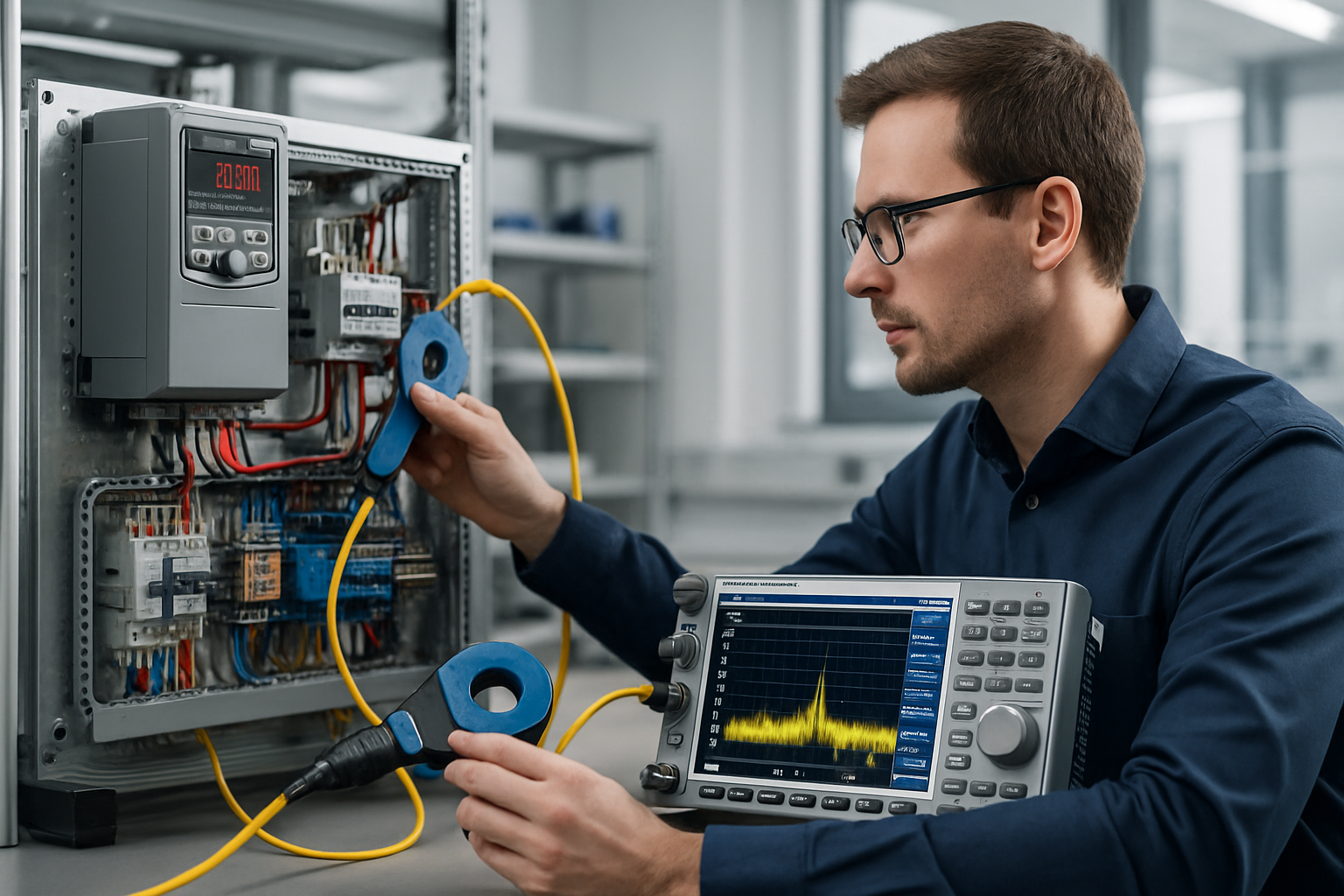
- Current Probes: Clamp-on probes, such as those found in our current probes and clamps range, are essential for measuring common-mode and differential-mode currents on power and signal cables.
- Near-Field Probes: Useful for localising emission sources on PCBs, cables, or enclosures. See our near-field probes and antennas and near-field probes for more details.
- LISNs (Line Impedance Stabilisation Networks): For conducted emissions measurements per IEC 61000-4-6.
2. Immunity Test Equipment
- Conducted Immunity Generators: Simulate disturbances such as surges, EFT/bursts, and voltage dips according to applicable standards. Explore our conducted immunity equipment for options.
- Transient Generators: For testing susceptibility to fast transients and surges.
- Current Injection Probes: Enable bulk current injection (BCI) tests, particularly for cable immunity.
When to Hire EMC Equipment
Hiring EMC test equipment is often the most practical solution for:
- Short-term troubleshooting or investigations
- Pre-compliance testing before formal certification
- Validating design changes or modifications
- Access to specialist tools not held in-house
Hiring allows you to use the latest equipment without the capital expense or maintenance burden. EMC Hire offers flexible hire periods and technical support to help you get started.
Common Mistakes to Avoid
- Neglecting Immunity Testing: Focusing solely on emissions can overlook vulnerabilities to transients or ESD.
- Incorrect Probe Selection: Using the wrong type or frequency range of current probe can lead to misleading results.
- Poor Test Setup: Inconsistent grounding, cable routing, or test environment can invalidate results.
- Ignoring Latest Standards: Always check your test plan against the latest version of IEC 61000-4-x or relevant manufacturer documentation.
FAQs
- What is the most common source of EMC issues in industrial drives?
- High-frequency switching in inverters and drives often causes conducted and radiated emissions, particularly on power and signal cables.
- Which current probe should I use for industrial drive EMC testing?
- Select a current probe with an appropriate frequency range and sensitivity for your application. See our current probes and clamps for guidance.
- Do I need both near-field and current probes?
- Yes, near-field probes help localise emission sources, while current probes quantify emissions on cables. Both are valuable for comprehensive diagnostics.
- How do I test immunity to transients?
- Use a transient generator or conducted immunity generator per IEC 61000-4-4 and IEC 61000-4-5. Confirm the test setup against your standard or test plan.
- Can I perform pre-compliance EMC tests in-house?
- Yes, with the right hired equipment and expertise, you can perform pre-compliance tests to identify and resolve issues before formal testing.
Conclusion
Choosing the right EMC test equipment for industrial drives requires a clear understanding of both emissions and immunity challenges. By selecting suitable spectrum analysers, current probes, near-field probes, and immunity generators, you can efficiently diagnose and resolve industrial drive EMC issues. Remember to verify all requirements against the latest standards and manufacturer documentation.
For expert advice or to request a quote on hiring EMC test equipment, contact EMC Hire today.